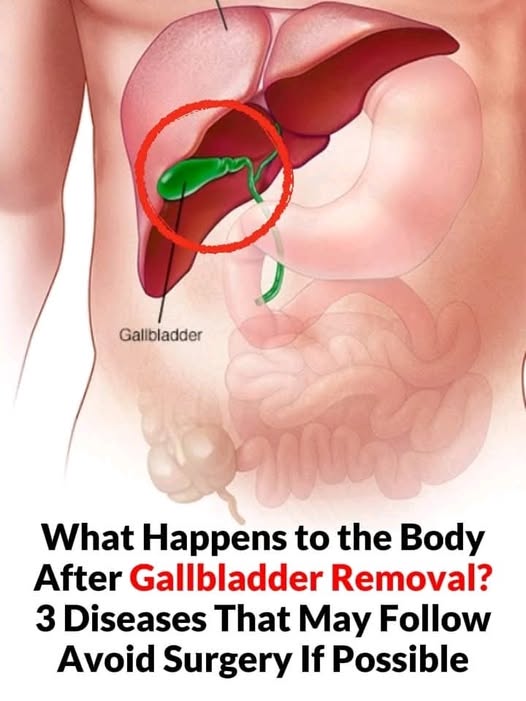
The idea that you should “avoid gallbladder surgery if possible” is not accurate as a general rule. For many people with significant gallbladder disease, removal is the safest and most definitive treatment. That said, it’s fair to ask what changes happen afterward and what complications can occur.
The gallbladder stores bile made by the liver, and surgery to remove it is called Cholecystectomy. It’s commonly performed for Gallstones or inflammation.
🧠 What happens after gallbladder removal?
After Cholecystectomy, bile no longer gets stored in a “reservoir.” Instead:
- Bile flows continuously from the liver into the intestine
- Digestion still works, but fat digestion can be less efficient at first
- Most people adapt within weeks to months
Many patients live completely normal lives afterward.
⚠️ Possible long-term issues (not everyone gets them)
Here are some conditions or symptoms that may occur in a minority of people:
1. Post-cholecystectomy syndrome
- Bloating, indigestion, or abdominal discomfort
- Sometimes linked to bile flow changes or unrelated GI issues
- Postcholecystectomy syndrome
2. Bile reflux or diarrhea
- Increased bile entering the intestine can speed up digestion
- May cause loose stools after fatty meals
- Usually manageable with diet changes
3. Sphincter of Oddi dysfunction (rare)
- Spasm or narrowing of bile duct control muscle
- Can cause pain similar to gallbladder attacks
- Sphincter of Oddi dysfunction
🧾 Important correction: “Avoid surgery if possible”
This is not universally safe advice because untreated gallbladder disease can be dangerous:
If you delay surgery in severe cases of Gallstones, risks include:
- Infection (cholecystitis)
- Blocked bile ducts
- Pancreatitis (a serious inflammation of the pancreas)
In many cases, elective surgery is safer than emergency surgery later.
🧠 Bottom line
- The body can function normally without a gallbladder
- Some digestive changes may occur, usually temporary or manageable
- Surgery is recommended when gallstones or inflammation cause symptoms or complications—not something to avoid blindly
If you want, I can explain:
- Who actually doesn’t need gallbladder removal
- Diet after gallbladder surgery
- Or how gallstones form and how to reduce risk naturally