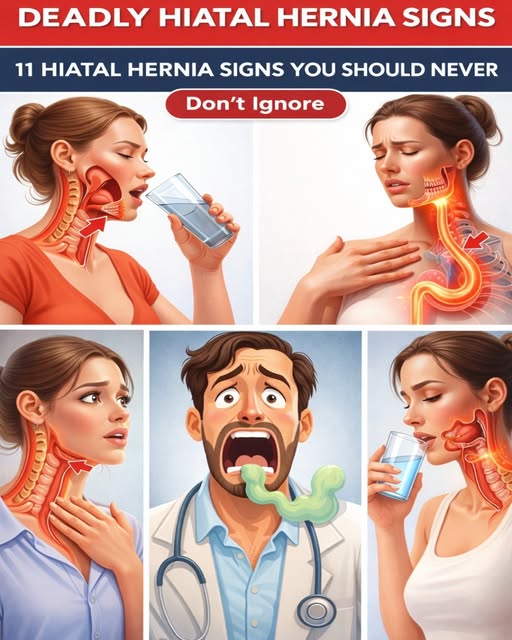
🫄⚠️ 10 Hiatal Hernia Signs and Symptoms You Should Know
A hiatal hernia happens when part of the stomach pushes upward through the diaphragm into the chest area. It’s often associated with acid-related symptoms and is sometimes linked with reflux conditions like Gastroesophageal reflux disease (GERD).
Here are 10 common signs and symptoms:
⚠️ 1. Heartburn
A burning sensation in the chest, especially after eating or lying down.
⚠️ 2. Acid reflux
Stomach acid moving back into the throat or mouth, causing sour taste or irritation.
⚠️ 3. Chest pain or pressure
Can feel similar to heart-related pain, often worse after meals.
⚠️ 4. Difficulty swallowing
Food may feel stuck or move slowly down the throat.
⚠️ 5. Frequent burping or bloating
Excess gas and discomfort after eating.
⚠️ 6. Regurgitation
Food or acid coming back up into the throat.
⚠️ 7. Shortness of breath
A large hernia may press on the lungs and affect breathing.
⚠️ 8. Feeling full quickly
Early satiety even after small meals.
⚠️ 9. Sore throat or hoarseness
Acid irritation can affect the vocal cords over time.
⚠️ 10. Worsening symptoms when lying down
Symptoms often increase at night or when bending over.
🧠 Important context
- Many people with a hiatal hernia have mild or no symptoms
- Symptoms often overlap with Gastroesophageal reflux disease
- Diagnosis usually requires medical evaluation (not self-diagnosis)
🚨 When to see a doctor
- Severe chest pain
- Trouble swallowing
- Persistent reflux despite medication
- Unexplained weight loss
🍽️ Helpful lifestyle tips
- Eat smaller meals
- Avoid lying down right after eating
- Reduce fatty, spicy, or acidic foods
- Maintain a healthy weight
If you want, I can also explain what causes a hiatal hernia, or a diet plan to reduce reflux symptoms naturally.